
Fueling Daily Life Safely: The Importance of LPG Cylinder Safety Standards
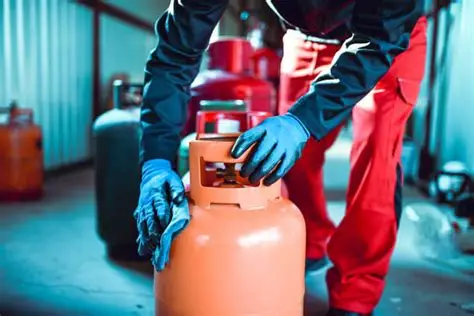
In almost every household in Saint Lucia, a cylinder of liquefied petroleum gas can be found. Utilized every day for cooking the meals our citizens consume, this energy source may be taken for granted. These cylinders, regardless of their importance in daily life, can pose significant safety risks if handled or stored incorrectly. This in turn can result in the loss of resources or lives. It is due to this risk that safety standards surrounding the handling of cylinders for liquefied petroleum gases are developed. The Saint Lucia Bureau of Standards is responsible for developing or adopting safety standards such as SLNS 43: 2006 and SLNS 44: 2006 to guide these essential but potentially hazardous processes.
LPG Saftey Standards
SLNS 43: 2006 Specification for filling, Handling, storage, Transportation and Location of portable, Cylinders for liquefied Petroleum gases – (LPG) is a standard which covers basic safety requirements for the filling, handling and storage of portable cylinders of Liquefied Petroleum Gases (LPG) at the cylinder filling plants and the positioning of cylinders at the premises of the consumers.
This standard does not cover safety installation requirements beyond the first stage regulator except for the use of flexible hose. The requirements of this standard are not intended to preclude the use of alternative materials, designs, and methods where these provide equivalent and approved standards of safety.
SLNS 44: 2006 Standard Specification for inspection, testing and requalification of portable containers for LPG is a standard which specifies the minimum requirements for the periodic inspection, testing and requalification of containers of liquefied petroleum gases to verify their integrity for further service.
It does not exclude the application of additional national requirements, nor does it preclude the use of alternative methods where they provide equivalent methods of safety.
Both LPG providers and consumers should consider whether they are fully aware of the basic safety requirements for filling, handling, and storing LPG cylinders.
Why do these standards matter?
The primary significance of these standards are to protect public safety and to protect businesses from the liability which may be associated with the distribution of faulty cylinders. It is important to note that an LPG cylinder which is not accurately filled, handled or stored can lead to gas leaks. This can accumulate leaked gas in enclosed or low-lying areas and can result in dizziness, unconsciousness or even asphyxiation. This escaped gas may also lead to explosions or fires resulting in damage to property, injuries and potentially the loss of lives. Proper safety measures should also be taken when filling cylinders as overfilled cylinders can rupture under pressure and explode. Exposure to elevated temperatures can also result in the violent rupture of the cylinder. Improper storage or transportation of gas cylinders can lead to structural weakening or damaging of the cylinder or its valves which may result in gas leaks. Standards like SLNS 43:2006 and SLNS 44: 2006 play an integral role in educating consumers and protecting the public from the potential risks of this energy source which is relied upon heavily. This standard also aids in assuring consistency and accountability in the LPG industry, ensuring that consumers are able to trust that providers of these cylinders are aware of and take into account practices laid out in these safety standards.

To whom are these standards relevant?
Safety standards relating to LPG cylinders are relevant to both businesses/ providers and consumers of this product. These standards provide valuable information on filing, inspecting, and testing cylinders, which is significant to providers. The standards also provide details on how to effectively transport and store LPG cylinders in order to prevent damage to the canister or valves. This information is pertinent to consumers beyond just assuring safety as these guidelines may aid in conducting practices which prevent gas leaks. This prevents consumers from having to replace the cylinders more frequently, allowing better value for money. This is extremely beneficial in this period of instability in fuel prices.
Beyond our role of developing and adopting safety standards like these the SLBS takes up the mantle of attempting to educate the public on measures to ensure safety and reliability in the quality of products distributed. As such consumers are implored to take heed of the following:
- Ensure your LPG cylinders are checked for damage before use. Before leaving LPG distribution establishments your provider should assess the cylinder to ensure that there are no leaks.
- Ensure the proper placement of your gas cylinders to protect from environmental damage or corrosion. Avoid, for example, storing LPG cylinders in direct sunlight for lengthy periods, close to electrical equipment or switches or in areas where they are exposed to direct heavy rain for long periods.
- Ensure to purchase all LPG cylinders from a reputable supplier.
- Ensure that you are aware of and understand the basic safety practices for handling LPG cylinders. By purchasing and applying safety guidelines provided in standards you can avoid falling victim to the risk of a damaged LPG cylinder.
It is the responsibility of every Saint Lucian to ensure the tools provided to protect public safety are effectively employed so as to protect lives and livelihoods. Standard SLNS 43: 2006 amongst other safety related standards can be conveniently accessed by LPG providers and consumers through our online portal at https://www.slbs.org/.