Reaching Markets
There is a remarkable tool that aids businesses in identifying and accessing new markets. If used currently businesses are able to branch regional and international markets if the product is quality and can provide for a niche market. What is this remarkable tool? Well, you do not need to look too far to attain it. Chances are you have already heard about it. This tool is none other than the standards accessible from your local National Standards Body like the Saint Lucia Bureau of Standards.
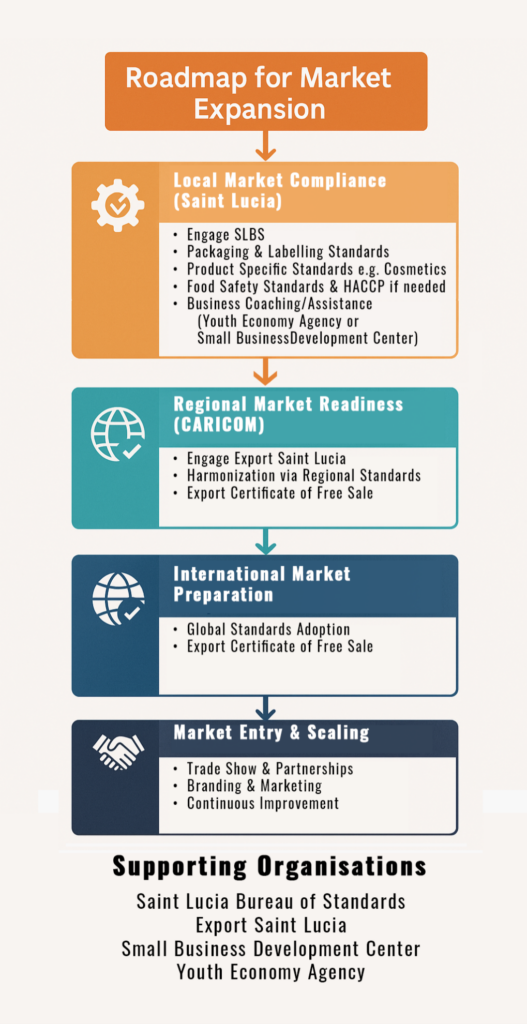
Standards provide small businesses with credibility, consistency, and compliance needed to expand into regional and international markets by levelling the playing field with a harmonized basis defining quality. Organisations like the Saint Lucia Bureau of Standards (SLBS) and the CARICOM Regional Organisation for Standards and Quality (CROSQ) play a central role in this process, especially in sectors like agro‑processing, cosmetics and even in service provision.
Why do Standards Matter for Market Expansion?
- Trust & Credibility: Standards reassure consumers and buyers that products meet safety, quality, and environmental requirements. This is crucial when entering new markets where brand recognition may be low.
- Market Access: Many regional and international markets require compliance with food safety, packaging, and labeling standards before products can be imported or sold.
- Efficiency & Consistency: Standards streamline production processes, reduce waste, and ensure uniform quality, making businesses more competitive.
Agro-Processing
Agro‑processing (turning raw agricultural goods into packaged products like jams, sauces, or dried fruits) is a growing industry in the Caribbean. Even in sea moss farming now is becoming a key and lucrative industry for rural farmers. Standards help these businesses via:
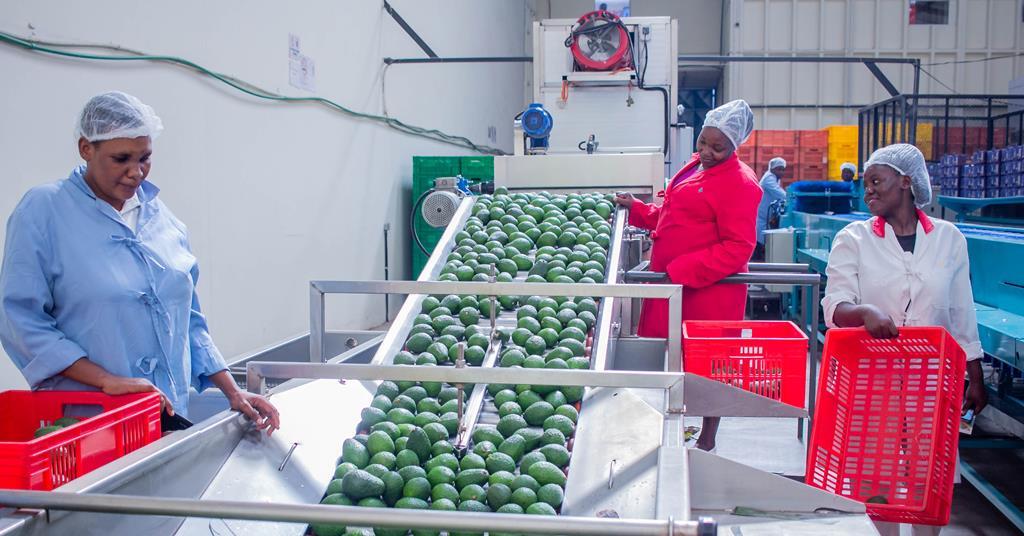
- Food Safety Compliance: SLBS has adopted standards like HACCP (Hazard Analysis Critical Control Point) and prerequisite programmes (PRPs) to guide micro, small, and medium enterprises (MSMEs) in implementing internationally recognized food safety systems.
- Regional Quality Infrastructure: CROSQ developed an agro‑processing factsheet under the Caribbean Development Bank’s “Strengthening of the Regional Quality Infrastructure” project. This initiative supports countries including Saint Lucia, Grenada, Guyana, and Suriname by raising awareness and providing guidelines for compliance.
- Export Readiness: By meeting packaging, labeling, and nutritional standards, Caribbean agro‑processors can sell products not only within CARICOM but also in North America and Europe, where strict import requirements exist.
Key Organisations and Programmes
Organisation | Role | Example Programmes |
Saint Lucia Bureau of Standards (SLBS) | National body ensuring products meet safety and quality standards | Development of Standards Adoption of HACCP and PRPs for MSMEs; Training workshops for food safety |
Export Saint Lucia | Export Saint Lucia is your gateway to getting your product or service to regional and international markets. Previously known as TEPA, they are the National Trade Export and Promotion Agency for the Saint Lucian Government. | Taste of Saint Lucia Enhancing Capacity of Stakeholders in the Agriculture Sector to Supply Quality Products in New Markets |
Youth Economy | The Youth Economy aims to attract and integrate rural youth and urban, at-risk youth who must have confidence in the fact that their ideas matter and they can become independent and sustainable entrepreneurs. | Training Concession Grants & Loans |
Small Business Development Center | help businesses become globally competitive by providing long term consulting, training, financing and market research solutions that create real economic impact. | Training Concession Grants & Loans |
CROSQ (CARICOM Regional Organisation for Standards and Quality) | Regional network harmonizing standards across CARICOM | Agro‑processing factsheet; Regional Quality Infrastructure project |
Caribbean Development Bank (CDB) | Funding and support for regional quality initiatives | Strengthening of the Regional Quality Infrastructure project |
Food & Agriculture Organisation | Standards for food. | CODEX Alimentarius |
How Standards Enable Expansion
- Regional Markets (CARICOM): Harmonized standards across CARICOM mean that once a product meets SLBS requirements, it is more easily accepted in other member states through CROSQ’s coordination.
- International Markets: Compliance with globally recognized standards (ISO, HACCP, Codex Alimentarius) allows Caribbean businesses to export to Europe, North America, and beyond.
- Capacity Building: Training and awareness programmes help small businesses understand and implement standards without being overwhelmed by technical requirements.
Challenges & Considerations
- Cost of Compliance: Implementing standards can be expensive for small businesses, requiring investment in equipment, training, and certification.
- Knowledge Gaps: Many MSMEs need ongoing support to understand complex international standards.
- Scaling Up: Standards help businesses grow, but scaling production to meet international demand requires additional infrastructure and financing.
In short: Standards act as a passport for Caribbean small businesses, especially agro‑processors, to move from local markets into regional CARICOM trade and eventually international exports. With SLBS ensuring national compliance and CROSQ harmonizing standards regionally, small enterprises gain credibility and access needed to thrive globally.